What is the Significance of Applying Rice Grains over Tilak in Hindu Traditions?
16 September, 2025
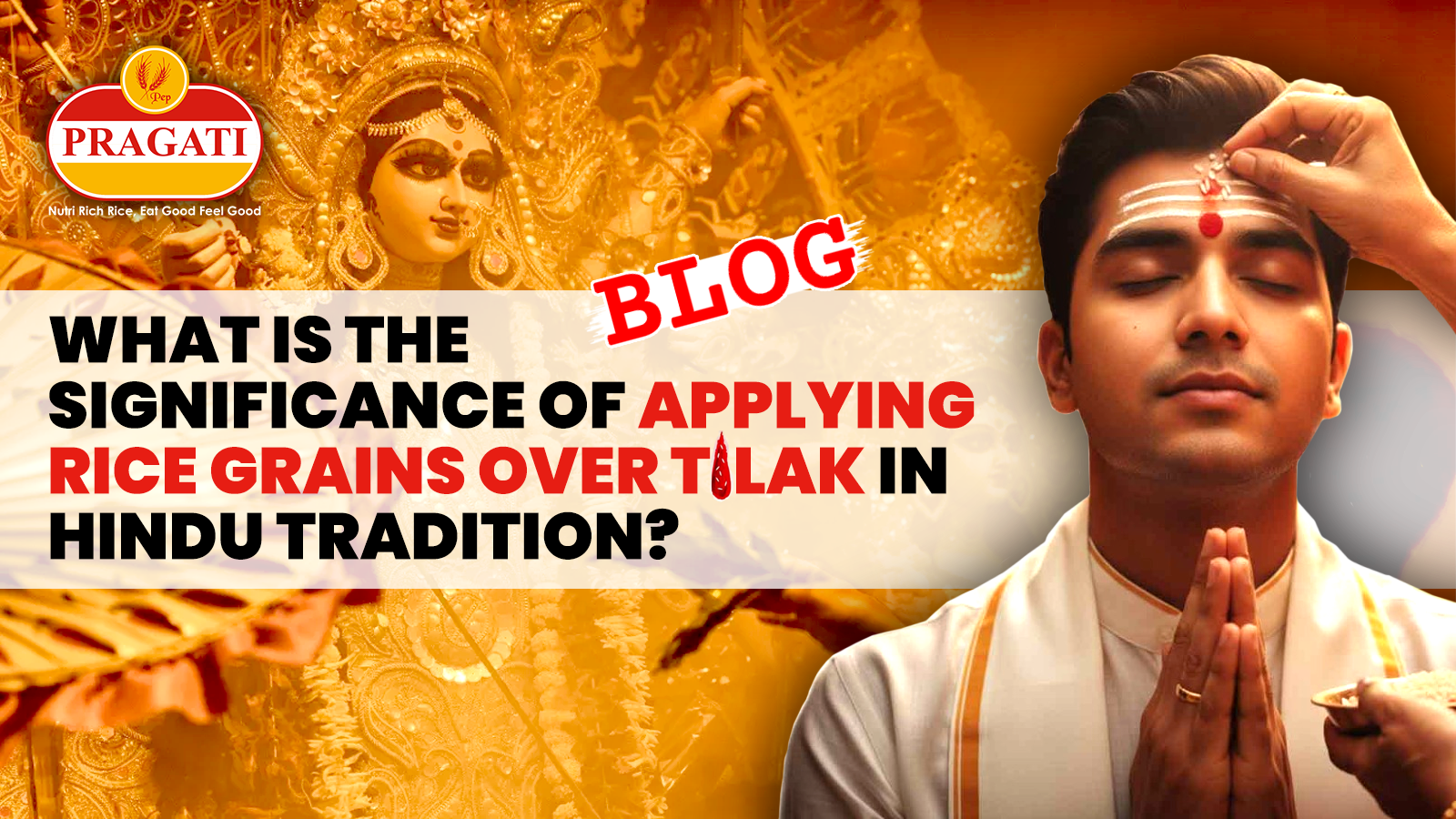
Every gesture in Hindu rituals carries layers of meaning, and one of the most recognisable symbols is the tilak – a sacred mark on the forehead. Whether made with sandalwood paste, kumkum, turmeric, or ash, a tilak represents devotion, purity, and connection with the divine. But often, devotees take this a step further by applying rice grains (akshat) over the tilak.
Though it may seem like a small ritual, this act has profound cultural and spiritual weight. It transforms the tilak into more than just a mark of faith – it becomes a carrier of blessings, prosperity, and completeness.
Historical Roots of Tilak and Rice
The tilak traces back to Vedic traditions, where sages applied marks on the forehead before performing yajnas (sacrificial rituals). These marks symbolised the opening of the third eye, spiritual awakening, and readiness for divine connection. Over centuries, tilaks evolved into sectarian and ritualistic symbols across Hinduism.
Rice, on the other hand, has been revered since Vedic times as Akshat. The very word means “unbroken” or “indestructible,” making it a perfect symbol of wholeness and permanence. In ancient rituals, rice was offered into the sacred fire to invoke abundance and the gods’ blessings. By placing rice over a tilak, devotees symbolically combine spiritual purity (tilak) with worldly prosperity (rice).
Religious Importance of Rice over Tilak
The Role of Rice in Hinduism
Rice is considered sacred because it sustains human life. It is believed to be a gift from Goddess Annapurna (nourishment) and an embodiment of Goddess Lakshmi (wealth). No major Hindu ritual, be it a puja, wedding, or festival, is complete without rice.
Why Rice on Tilak?
When rice is placed over the tilak, it carries threefold meaning:
Thus, rice over tilak is more than a ritual-it is a sacred seal of blessings.
Spiritual Symbolism
Spiritually, the forehead is the seat of the Ajna Chakra or the “third eye,” believed to govern intuition and higher wisdom. Applying a tilak activates this energy point, and rice grains on top act as a reinforcement of divine connection.
This is why many Hindus never leave a temple without receiving a tilak with rice; it is seen as carrying the god’s grace forward.
Regional Practices Across India
India’s cultural diversity gives these ritual unique flavours in different regions:
Modern-Day Relevance
In today’s times, many ancient rituals fade into symbolism, but applying rice over tilak continues to thrive. Why? Because it is simple, universal, and meaningful.

Confused between Miniket, Banskati, and Gobindobhog rice? Discover their unique ...

Rice is more than a staple—it’s a global story of culture and farming. With ...
Rice is an everyday essential, and true quality goes beyond appearance or price....
A comforting bowl of curd rice made with soft Pragati Diamond Miniket Rice. Crea...

Discover the bold flavours of Korean-Gobi Fried Rice — crispy cauliflower mee...
Cook authentic Bengali Muri Ghonto with fish head and Pragati Gobindobhog Rice. ...