

Rice arrives at your table quietly. It steams in the kitchen, settles onto plates, and becomes part of meals shared without a second thought. We eat rice almost every day – yet rarely pause to consider the journey behind it.
From seed to serving bowl, rice travels through a complex and carefully managed process. And while that journey may be invisible to consumers, it is one built on precision, responsibility, and trust.
This is the story of the work you never see – but always rely on.
It Begins in the Fields
Every grain of rice starts as paddy in carefully selected fields. The choice of paddy matters. Soil conditions, seasonal cycles, and farming practices all influence the character of the final grain.
In Eastern India, especially West Bengal, rice cultivation carries generations of knowledge. Farmers understand how climate and soil affect texture and yield. Selecting good quality paddy at this early stage is not optional – it sets the tone for everything that follows.
For brands committed to consistency, sourcing is the first checkpoint. Because if the foundation isn’t right, no later process can fully compensate.
Cleaning, Milling, and Careful Handling
Once harvested, paddy undergoes cleaning and milling to separate the grain. This stage demands hygiene, precision, and controlled conditions.
Dust, husk particles, and impurities must be removed carefully. Modern milling systems use calibrated equipment to ensure grains are handled without unnecessary breakage. Controlled environments help maintain cleanliness and product integrity.
This part of the journey may seem technical, but it directly influences how rice cooks later in your kitchen – how evenly it boils, how intact the grains remain, and how consistent the texture feels.
Storage: Protecting What Has Been Grown
Rice is sensitive to storage conditions. Temperature, humidity, and ventilation play a significant role in maintaining grain quality.
Proper storage facilities are designed to:
- Prevent moisture imbalance
- Protect against contamination
- Maintain consistency in grain condition
In the rice industry, careful storage is not just good practice – it is essential. Without it, even well-sourced paddy can lose its quality over time.
Quality Checks and Lab Testing
Before rice reaches consumers, it typically passes through multiple quality checks. Industry-standard processes may include physical inspections and laboratory testing to assess grain parameters such as moisture levels and overall quality benchmarks.
These checks are conducted to ensure the rice aligns with regulatory and food safety standards. Following established guidelines, including compliance with applicable food regulations, helps maintain consumer trust.
This stage often goes unnoticed – but it is one of the most critical parts of the journey.
Technology Meets Tradition
India’s rice traditions are centuries old, but today’s rice processing benefits from modern technology. Automated sorting systems, grading machines, and advanced packaging lines help improve consistency and efficiency.
Technology supports – not replaces – experience. It allows rice processors to maintain uniformity across batches, especially important for households that expect the same cooking behaviour every time.
In a country known for its diverse rice varieties, consistency matters. Different regions prefer different grains, but within those preferences, reliability builds loyalty.
Packaging for Protection
The final step before rice reaches homes is packaging. Proper packaging protects rice from moisture and external contaminants during transport and storage.
It ensures that the rice you cook at home retains the same condition it had at the facility. Sealed, hygienic packaging plays a silent yet essential role in preserving quality until the first wash and boil.
Where Pragati Rice Fits In
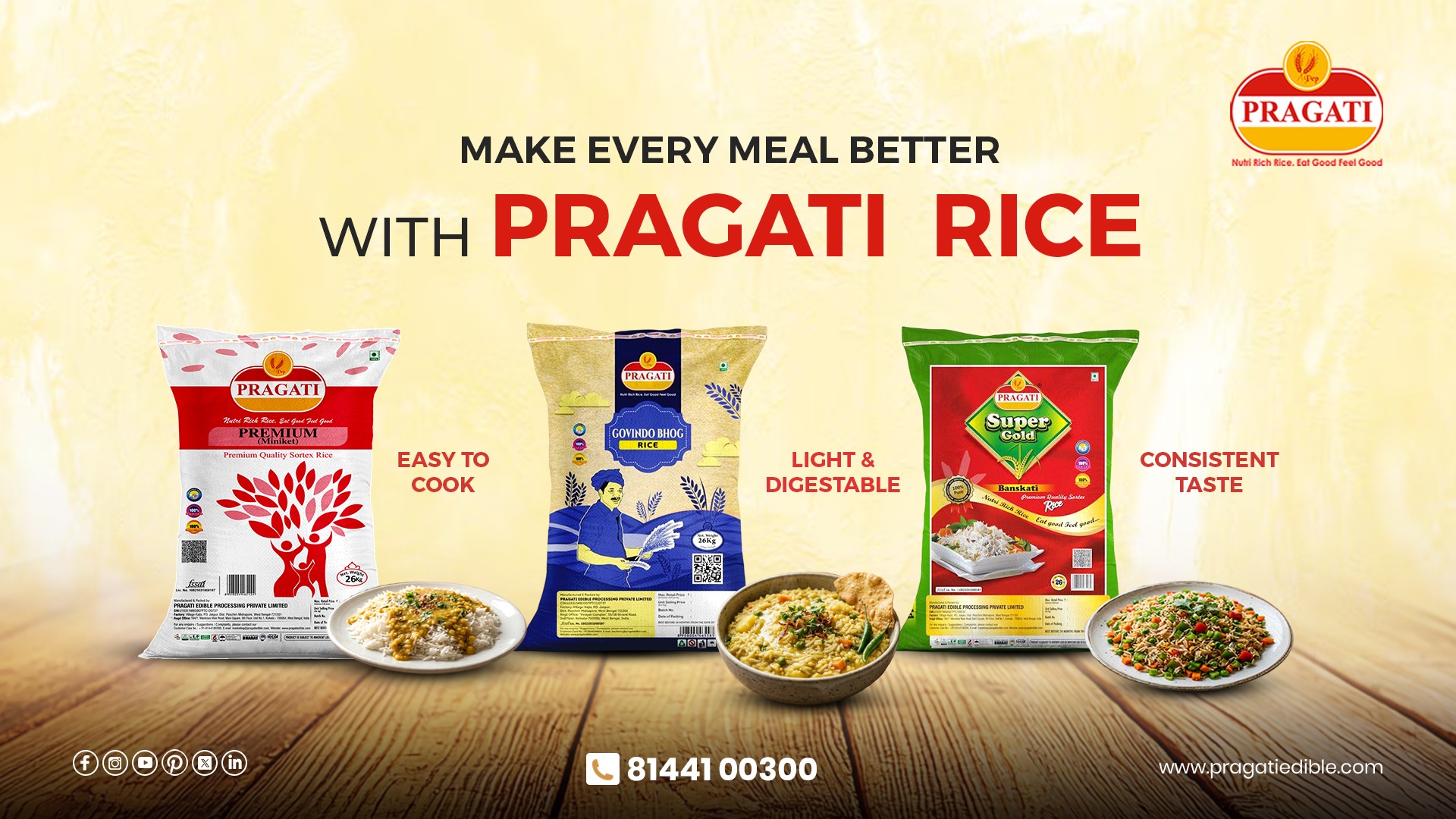
Rooted in West Bengal, Pragati Rice reflects this complete journey – from careful paddy sourcing to structured processing and quality checks.
Rather than focusing only on the final product, the emphasis remains on each stage that shapes it:
- Selection of quality paddy
- Hygienic handling and milling
- Proper storage practices
- Standard quality inspections
- Responsible packaging
This structured approach allows Pragati Rice to serve households that value consistency in everyday cooking – whether preparing simple meals or traditional Indian regional rice dishes.
There is no dramatic claim here. Just pay attention to the process.
Why the Journey Matters
Rice may look simple in a bowl, but simplicity is often the result of careful complexity.
Consumers trust rice brands not because they see the machinery or the testing labs – but because the rice cooks the way it should. It feels familiar. It behaves predictably. It suits the recipes passed down through generations.
Behind that trust lies a chain of responsibility that stretches from field to factory to kitchen.
The Invisible Work Behind Everyday Meals
India’s relationship with rice is emotional and cultural. It is served at celebrations, rituals, and daily dinners alike. Yet, for rice to play that dependable role, unseen systems must work quietly in the background.
The journey you never see is the reason you never have to worry.
And in that quiet consistency, trust is built – one meal at a time.