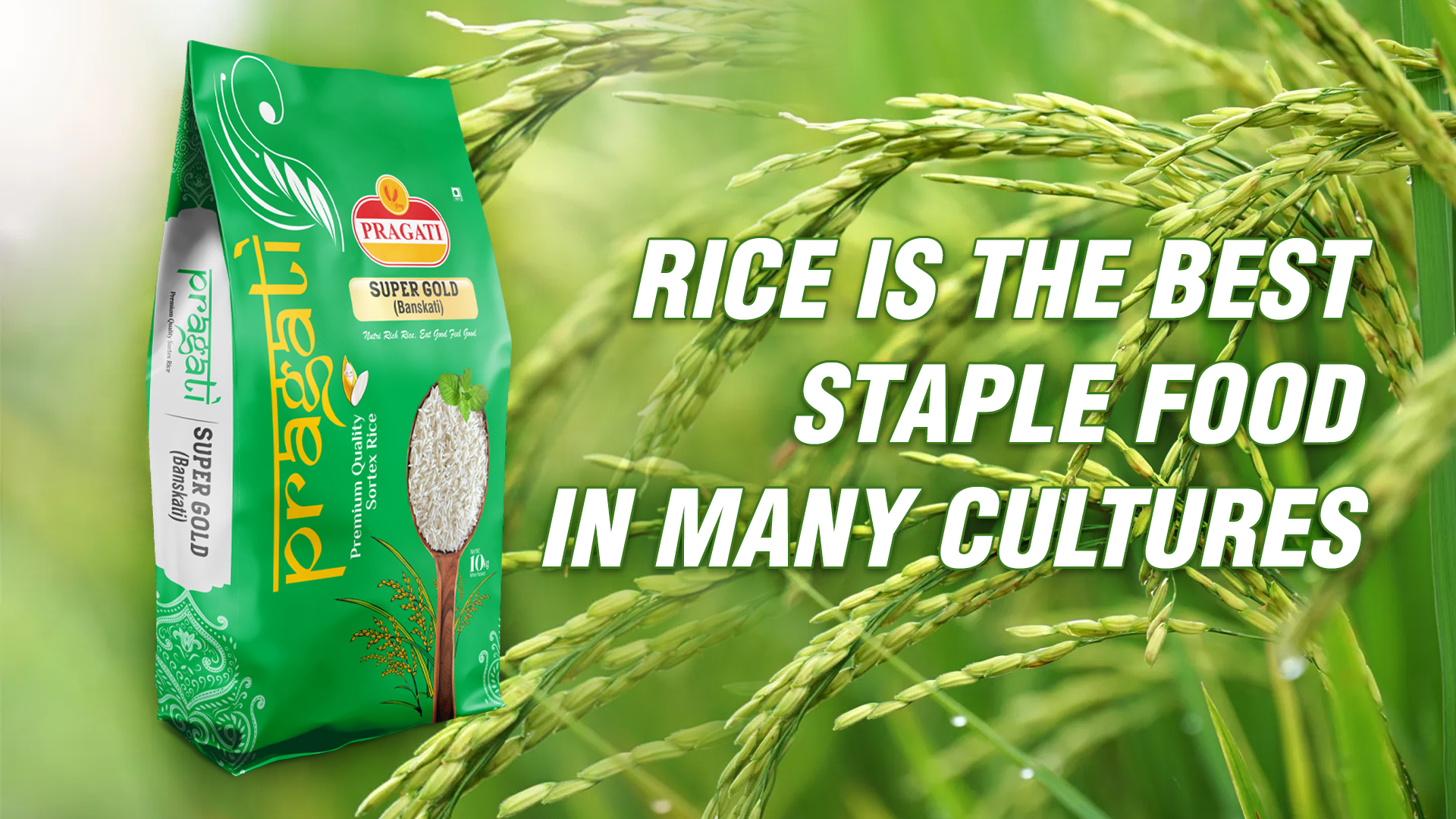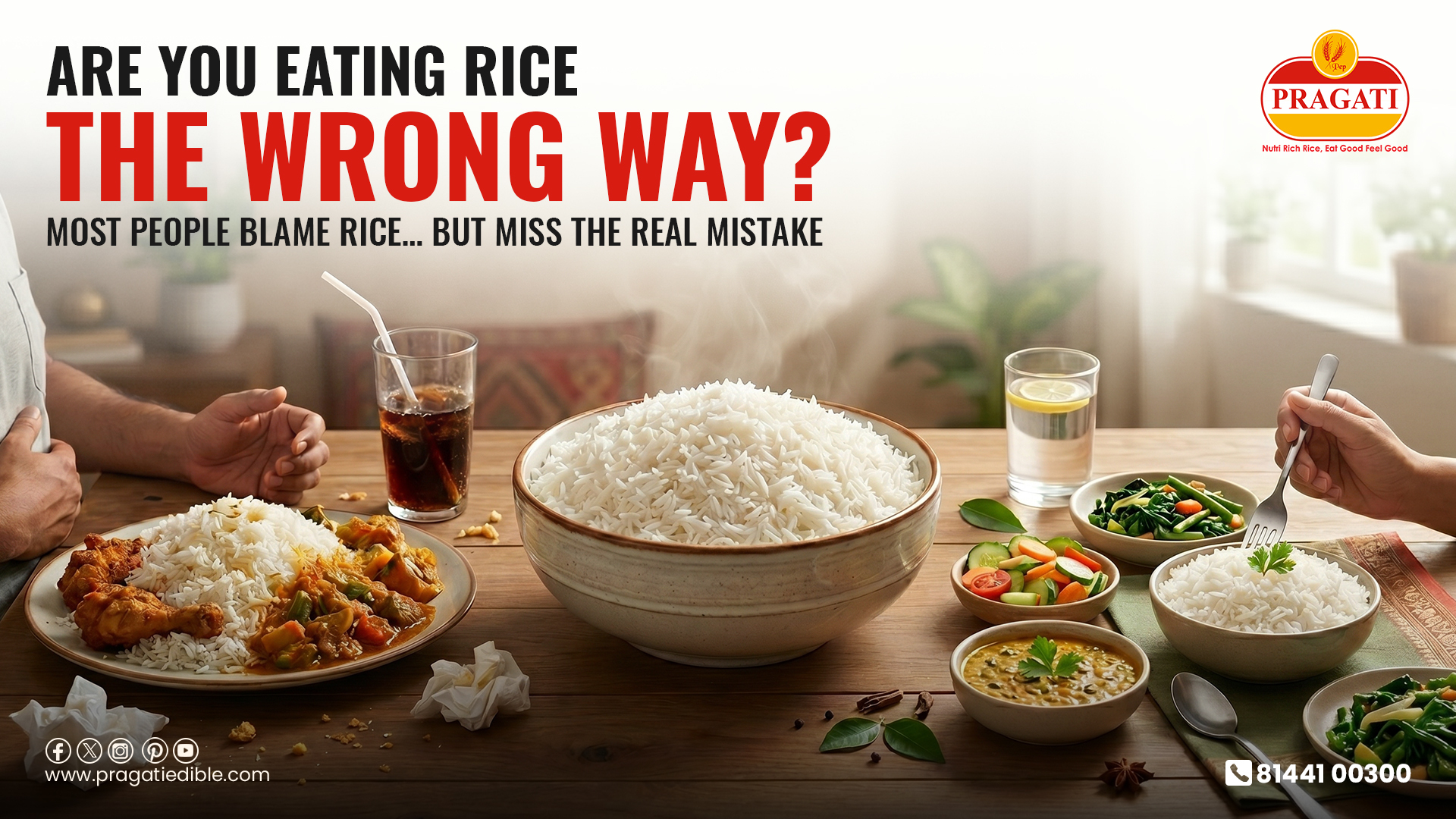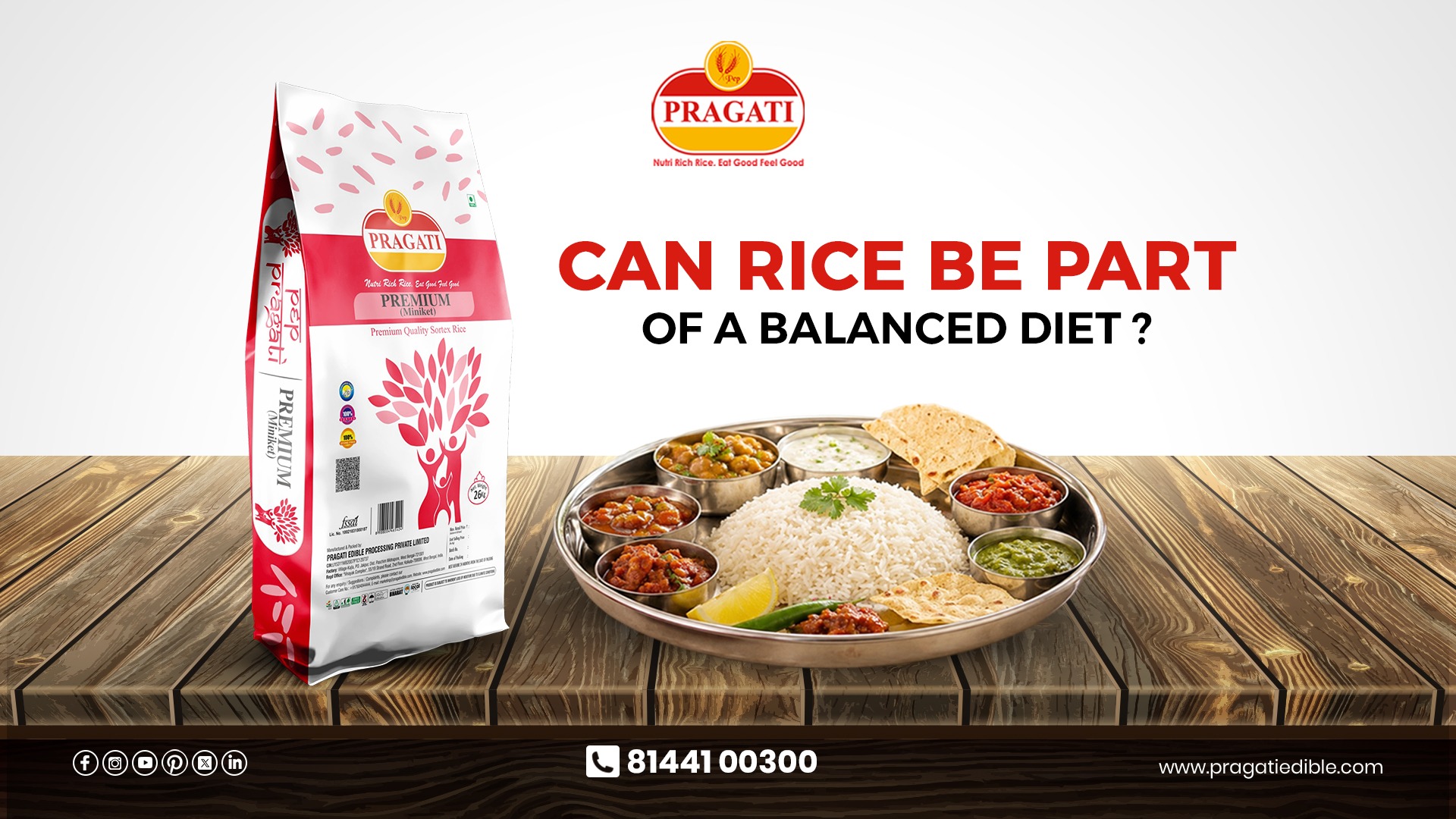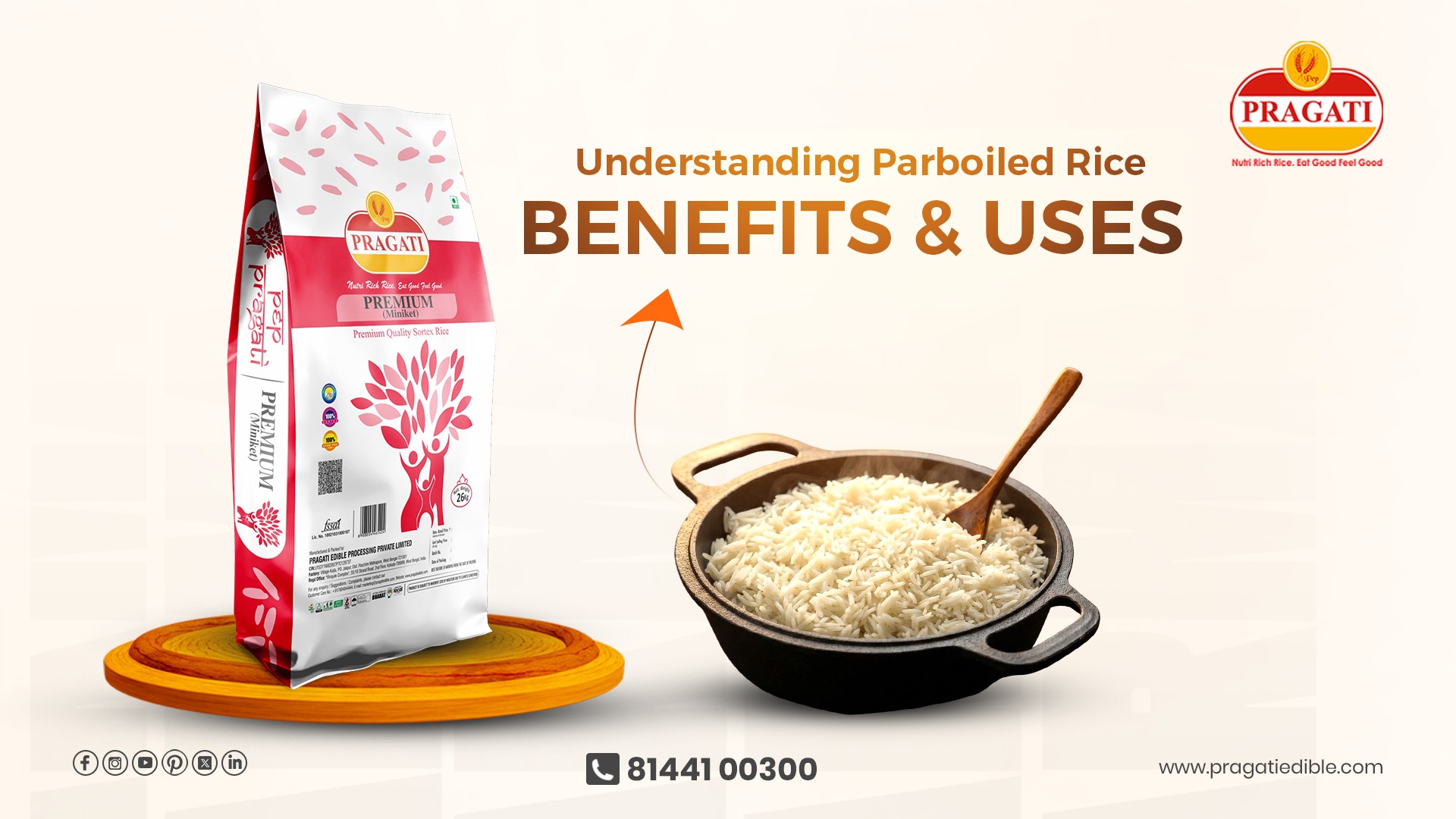

For centuries, rice has been the foundation of nourishment in Indian households – a symbol of comfort, tradition, and vitality. Yet in the modern age of dietary trends and fitness fads, rice is often misunderstood and unfairly sidelined. The truth, however, is quite the opposite. When consumed mindfully, rice is not only wholesome but also vital for balanced nutrition.
At Pragati Rice, we believe that true wellness begins with what’s on your plate. Every grain of rice carries essential nutrients, energy, and a touch of heritage – making it a daily food that supports both body and soul. Let’s explore five surprising health benefits of eating rice every day.
1. Sustained Energy for an Active Lifestyle
Rice is a rich source of complex carbohydrates, the body’s primary source of energy. Unlike refined sugars that cause sudden spikes and crashes, rice releases energy slowly and steadily – keeping you active throughout the day.
Whether it’s a busy work schedule or a long day at school, a bowl of rice offers lasting stamina and mental alertness.
Pragati Parboiled Rice locks in up to 80% of natural vitamins, ensuring your daily meals are as energising as they are nutritious.
2. Naturally Gentle on Digestion
Rice is one of the easiest foods for the body to digest. Its soft texture and low fibre content make it especially suitable for those with sensitive stomachs, children, and the elderly.
The starch present in rice acts as a natural binder, soothing the digestive system and helping maintain gut balance. When paired with curd, dal, or vegetables, rice forms a perfectly balanced meal that promotes overall digestive wellness.
Light, simple, and nourishing – that’s the timeless comfort of rice.
3. Heart-Healthy and Low in Fat
Rice is naturally cholesterol-free, trans-fat-free, and low in sodium – qualities that make it an excellent food for heart health. Regularly including rice in your diet may help manage blood pressure and reduce the risk of cardiovascular diseases.
Moreover, parboiled rice varieties like Pragati Rice retain vital minerals such as magnesium, manganese, and selenium – nutrients known to support healthy blood circulation and heart function.
Every grain of Pragati Rice is a step toward a heart-healthy lifestyle.
4. Promotes Skin Health and Boosts Metabolism
Rice is an excellent source of B-complex vitamins – including niacin, thiamine, and riboflavin – which play key roles in maintaining healthy skin, hair, and metabolism. These vitamins help convert food into energy, support nerve health, and promote cellular regeneration.
A daily serving of rice ensures that your body gets these essential nutrients naturally, keeping you energised and radiant from within.
With Pragati Rice, good health begins from the inside out.
5. A Source of Emotional Comfort and Cultural Balance
Beyond its nutritional value, rice carries emotional and cultural significance. For generations, rice has represented warmth, home, and connection – bringing families together over simple yet meaningful meals.
From khichdi to payesh, rice has always been the heart of India’s kitchen traditions. Eating rice daily is not just about nutrition; it’s about preserving heritage, promoting balance, and celebrating the simple joy of wholesome food.
At Pragati Rice, every grain is a tribute to India’s timeless bond with nature and nourishment.
The Pragati Promise: Health, Purity, and Tradition in Every Grain
Choosing rice wisely makes all the difference. Pragati Parboiled Rice undergoes a unique process that preserves up to 80% of natural vitamins and minerals – ensuring your meals are both delicious and nutritionally rich.
We bring you rice that’s pure, easy to digest, and full of natural goodness – perfect for those who value health without compromising on taste.
Because at Pragati Rice, we believe that a healthy life begins with the right grain.
In Every Grain, a Promise of Well-Being
Rice is more than food – it’s nourishment, culture, and care in its purest form. From sustaining your energy to improving digestion, promoting heart health, and supporting radiant skin, rice truly embodies the essence of holistic wellness.
With every meal, let Pragati Rice remind you that health doesn’t have to be complicated – it’s found in simplicity, balance, and the grain that has sustained generations.