All posts by admin

Enjoy Kheer On the Occasion of Buddha Purnima

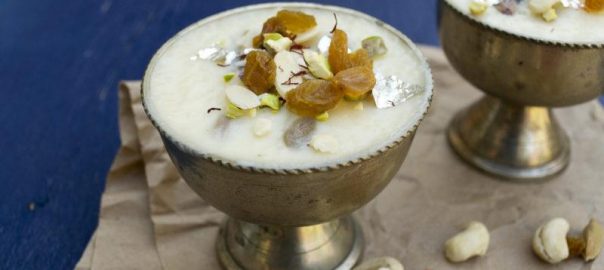
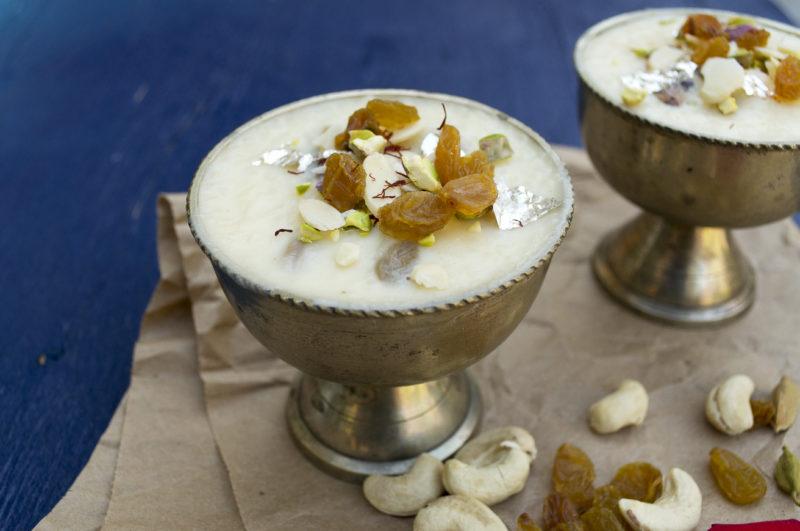
The word ‘kheer’ is as sweet as it tastes and it brings a smile to our faces!  Kheer is basically sweetened rice pudding. Kheer happens to be a better alternative to the other mainstream sweets. It is prepared with natural ingredients and is very healthy with fewer calories. It is also a great source of carbohydrates which helps in restoring your glycogen that gets depleted from the muscles after a long day’s work.

The kheer has carved itself a special niche in the world of desserts and is considered an extremely valuable source of nourishment. It is basically a sweetened rice pudding that originated in the Indian subcontinent.

There is a legend associated with kheer and Lord Buddha. Siddhartha, in search of answers and austerity, decided to meditate in the Sena village near the Uruvela region, near the banks of river Niranjana. However, after six long years of intense meditation, he was reduced to skin and bones. On her way home, a beautiful girl called Sujata, the eldest daughter of Nanda, the chief herdsman of the village saw the emaciated Gautama and offered him kheer to provide some nourishment. Buddha was overwhelmed with gratitude and thanked Sujata profusely. After Gautama had his fill, he took a bath in the river and threw the bowl in the river stating if he were to succeed in his endeavours, the bowl should go upstream, or else downstream. The bowl, to everyone’s amazement, went upstream! An infallible prediction which later turned out to be the truth! Siddhartha went on to become the enlightened one.

Kheer is prepared by slow cooking rice in milk with the addition of fragrant ingredients like saffron, cardamom, raisins, nuts and dried fruits. It is sweetened with sugar or jaggery. Sometimes rose or kewra water is sprinkled afterwards. Kheer is also known as meetha bhaat, payasam, payasa.

As you can see it is extremely easy to prepare kheer, loaded with various nutrients and perfect for a healthy diet! Prepare your own version of kheer on the occasion of Buddha Purnima and let us know how it turned out!
Akshaya Tritiya – Be A Perpetual Source of Happiness

This special occasion is surrounded with epic mythological facts. The stories or the legends are intriguing considering how it adds value to our lives. The auspicious day of Akshaya Tritiya is associated with many legends. How many allegories are you familiar with?

A festival, commemorated by both the Hindu and the Jain communities, is believed to be extremely lucky for starting a new venture. According to Hindu mythology, Lord Parasurama was born on this day. Moreover, many people believe that on this day, river Ganga came into existence to purify mankind.

However, there are two tales of Lord Krishna connected  to this auspicious day. Many of you are aware of the banishment of the Pandavas and their wife Draupadi. During their exile, a saint happened to call on them and asked for some food. There was no food left, as the brothers and their wife had already finished their meal. Out of options, Draupadi kept praying to Lord Krishna to show a way to feed the saint, as she did not want to turn away a sage who had himself requested for food. Lord Krishna, pleased with the devotion, came to their aid. When he arrived, hungry himself, he observed that only one grain of rice stuck to the pot. Picking up the grain of rice, he ate it and announced that he was full, thereby turning the pot into an Akshaya Patra. The pot of rice would provide unlimited food and whoever visited their humble abode would not return empty handed. Thus, when the saint returned with 400 disciples, Draupadi fed them all from that one single pot. The pot would remain full till Draupadi finished eating herself after feeding all her guests.

Hence, the person who is generous and helps out others in dire need, is often referred to as ‘Akshaya Patra’, a perennial source. There is another story related to rice and Lord Krishna surrounding this holy occasion. Krishna had a very poor friend named Sudama. Sudama’s wife asked her husband to take the help of Krishna so that they would be able to get out of abject poverty. Being a generous person, he refused to go empty handed, and so his wife packed three handful of puffed rice, in a scarf. Upon reaching Lord Krishna’s place, he was overwhelmed with joy and love. The bond of friendship between them was so intense, he became oblivious of the fact that he had come for help. But when the latter was about to depart, Krishna asked him to hand over the gift that he had brought with him. Krishna thanked him effusively for the gift, but Sudama still could not ask Krishna for help. He went back with his mission unfulfilled. However, a miracle took place when he reached home; Sudama found his house overflowing with rice, food, gold and riches. The tale signifies how doing good for others, being generous to others, comes back in unexpected ways.

Do let us know how you enjoyed the occasion of Akshaya Tritiya, with rice delicacies like payasam and bhog.

Include Khichdi In Your Diet Often

When was the last time you had khichdi? Was it during any Puja or festive occasions when it got served in the form of ‘bhog’? Or were you sick and you got served with a bowl full of goodness for complete nourishment?

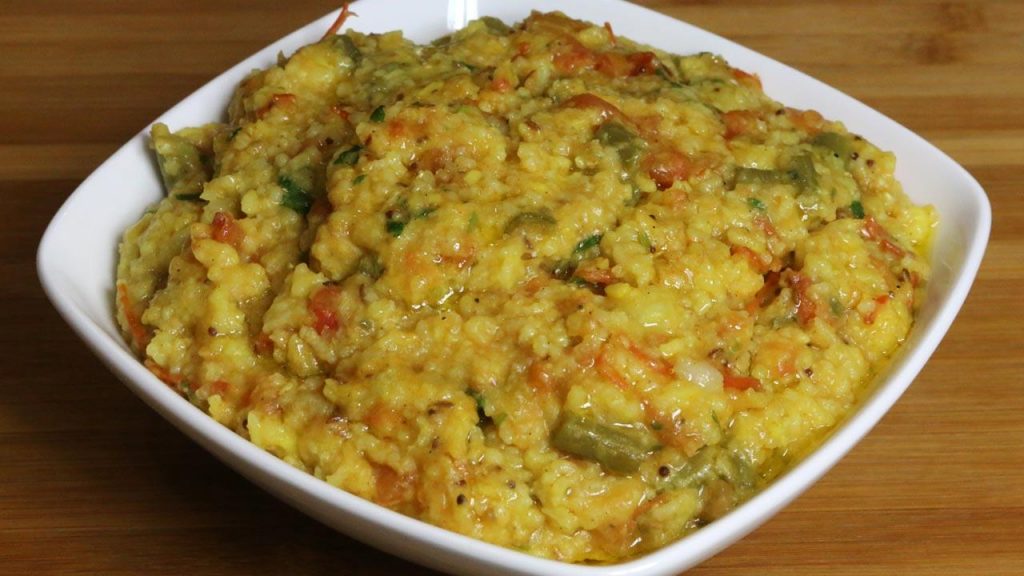
An ancient Ayurvedic recipe, the khichdi is a wholesome and a comforting meal, prepared with the combination of lentils and rice. Although a variety of the dish exists, depending upon the spices provided, the basic ingredients remain the same. This nourishing platter is very light and is easy to digest, and it helps the body to detoxify. Although people are sometimes reluctant to have it, due to its plainness, but it is of vital essence.

The nutritious recipe has an appropriate balance of proteins and carbohydrates. One of the basic ingredients used in the preparation is the moon beans, which are a great source of dietary fiber, potassium, calcium and magnesium and vitamin C. The 10 essential amino acids present in the beans make the dish a complete protein source. In addition to this, the vegetables added to the dish only add up the nutritional value. The rice is a rich source of carbohydrates; and the khichdi itself is a gluten-free delicacy. The people sensitive to gluten and prone to celiac disease can consume this item of food.

Moreover, it is a tridoshic platter, which means it has the capability of stabilizing the three doshas- Pitta, Vata, Kapha and helps in detoxifying the body. The rice present in the khichdi is easily digested along with the essential vegetables and lentils. The rice also helps in bringing down the body temperature during the scorching summer. It is known to have healing powers and calms the intestinal walls and also helps in the regulation of stress. The chemical serotonin, believed to be able to prevent depression, is produced 95 percent in the gut. During chronic stress, our intestinal walls get irritated affecting the natural process of digestion. Thus, a bowl full of this rice-rich delicacy becomes necessary to get rid of the stress issues.

Why do the monks and the ascetics prefer this simple yet valuable form of sustenance? It is thought to have spiritual essence as it helps in regulating the stress levels and keeps our body cool. It is surprising to think that one dish can have so many values! It is considered to be one of the safest nutriments that women can consume during the stage of pregnancy.  The khichdi is also known to exemplify the practice of nonviolence (Ahimsa) and is one of the reasons why the yogis prefer this simple, clean yet energy-containing dish. Sometimes it is useful to include these sattvic foods (dishes filled with qualities) in our diet, what do you think?

Rice-An Integral Part Of Bengali Diet and Life

Has the thought ‘Bengalis and their love for rice’ ever crossed your mind? How did rice become ubiquitous in every meal or cuisines that the people feast upon? Bengal has been famous for its exquisite cuisines, especially based on rice, ever since the civilization came into existence in the landscape of the gluttons.

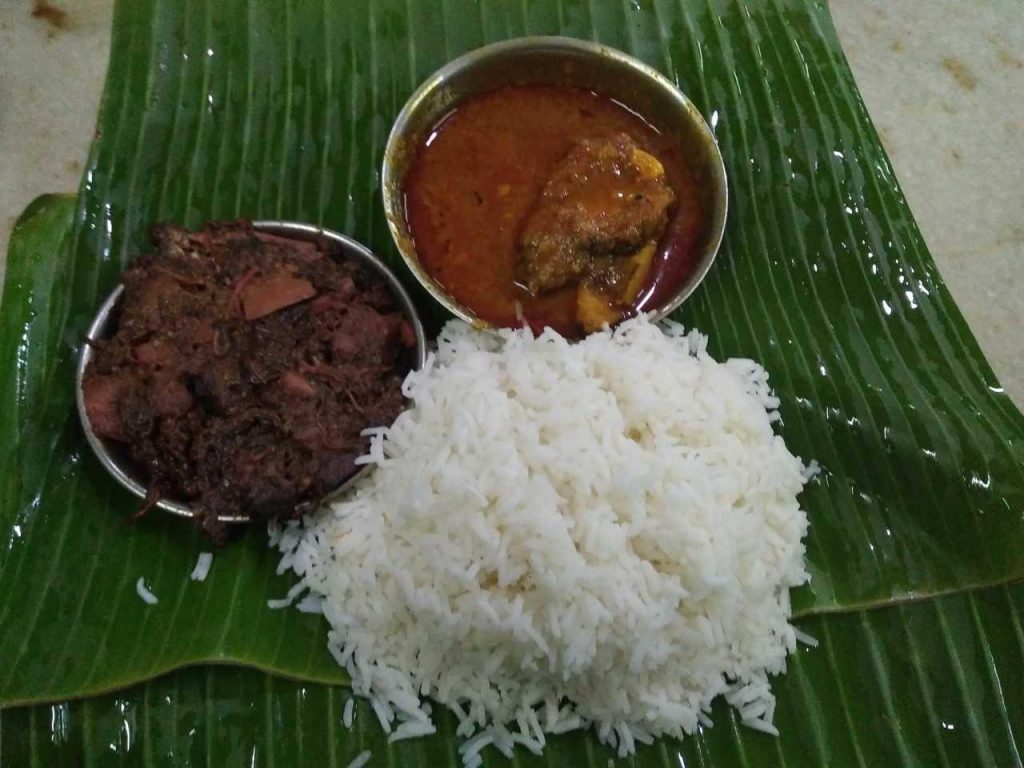
The state of West Bengal and Bangladesh, traditionally, has been renowned for its extraordinary fertile agricultural land. Moreover, the production of paddy has been supported by the uninterrupted flow of the rivers. This is one of the main reasons why rice emerged as the staple diet of the Bengalis since time immemorial. Thus, a diverse and rich variety of dishes comprising of both vegetarian and non-vegetarian platters evolved. Dishes like posto ( poppy seed paste), dal (lentil soup), mutton and fish curry are consumed with rice. The satiety obtained from ‘devouring’ these dishes is unparalleled.

Paddy cultivation from Southeast Asia came to Bengal almost 5,000 years ago and rice became a major calorie resource of the Bengali daily life. The paddy cultivation is practiced almost three times a year in Bengal. The aman cultivation is the most important among the three. The paddy is planted during monsoon and harvested in the late autumn. Following this, the aush is second on the list. The paddy is planted around May-June and harvested during the August-September time period. However, the latest plantation practice is the boro, and has been popularized with the inception of new irrigation techniques. This particular cultivation takes place during the winter and the crop is harvested in early summer.

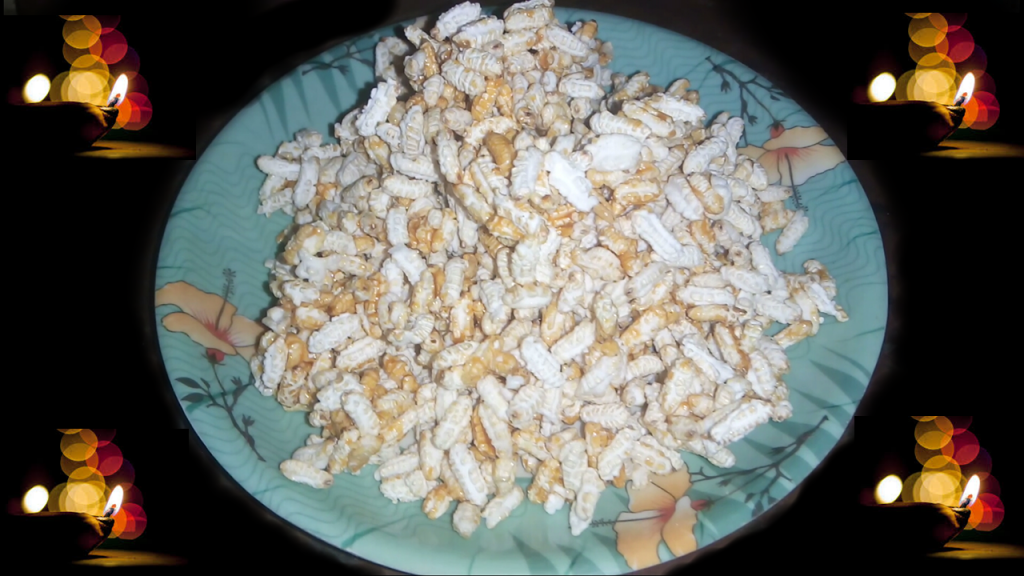
The rice has been the cynosure for various legends, literary texts, and religious practices. The significance of rice and dal, besides the rice and fish, in the daily life of a Bengali household can be traced back to the Vaishnava Bhakti cult movement. A substitute for fish and meat had to be discovered, as the followers were strict vegetarians. Preparation of rice and dal, known as Khichudi, offered to the deities as bhog, came into the limelight. And, this dish became significant for the people. Apart from this, different kinds of puffed rice such as muri, khoi and flattened rice also fulfilled the daily needs of the common mass. The fact that rice is so popular and acts as the primary food item in Bengali diet is evident in several government reports. For instance, a 1940s report showed that in order to survive 3600 calories were required daily, and almost 3500 calories were received from the rice itself. Amazing right?

“Give a bowl of rice to a man and you will feed him for a day. Teach him how to grow his own rice and you will save his life”-Confucius. The quote is valid even today.

A Brief History Of Poila Baisakh And The Traditional Customs

Poila Baisakh marks the first day of the Nobo Borsho (new year) of the Bengali calendar. The festival is celebrated among the Bengali communities in India and falls around mid-April as per the Gregorian calendar. The occasion is commemorated with a lot of pomp and show, and people enjoy this occasion by spending time with their families and friends.

You would be amazed to know about the inception of the Bengali calendar. It was instituted by the Mughal Emperor Akbar in the 15th century. Agricultural activities, especially harvesting of rice has been the mainstay of the Indian economy for the longest time. And the new calendar was introduced due to the levying of taxes. This unique Bengali calendar is a mix of both the Hindu solar and Hijri lunar calendars and was launched in 1584.

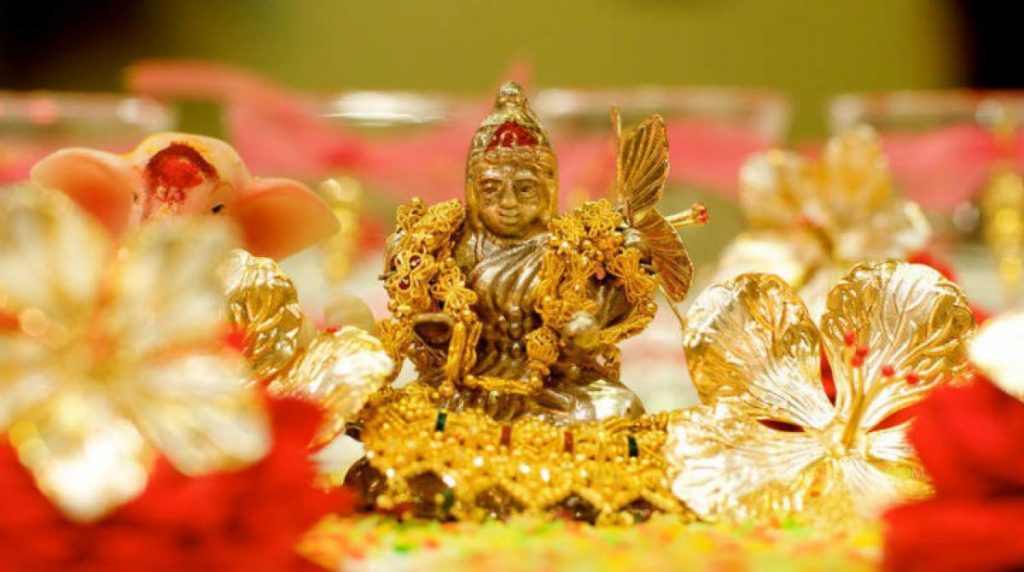
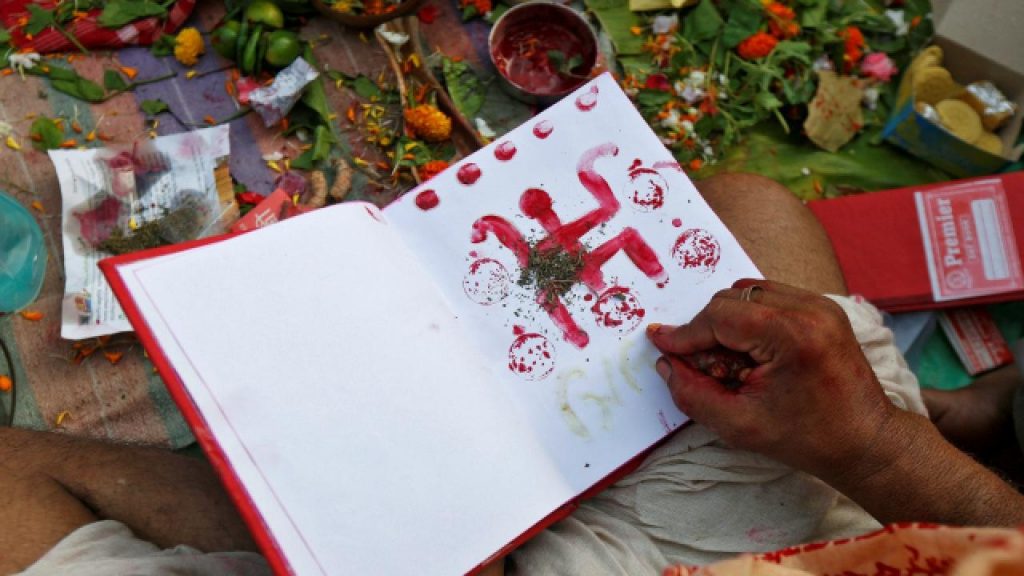
Usually, the day begins with prayers being offered to Laxmi and Ganesha. Laxmi is associated with wealth and prosperity and she is regarded as Annapurna (provider of a bounty of rice). The prayers are offered in the hope of a healthy and flourishing year ahead. Poila Baisakh is also the beginning of the harvest season (especially rice) in West Bengal, so the people also worship the clouds. A traditional custom is involved wherein a special breakfast consisting of soaked rice, fried fish, onions and green chilies are consumed. The inauguration of the Haalkhata or new accounts register is another traditional practice observed on Poila Baisakh, the ideal day to begin new ventures.

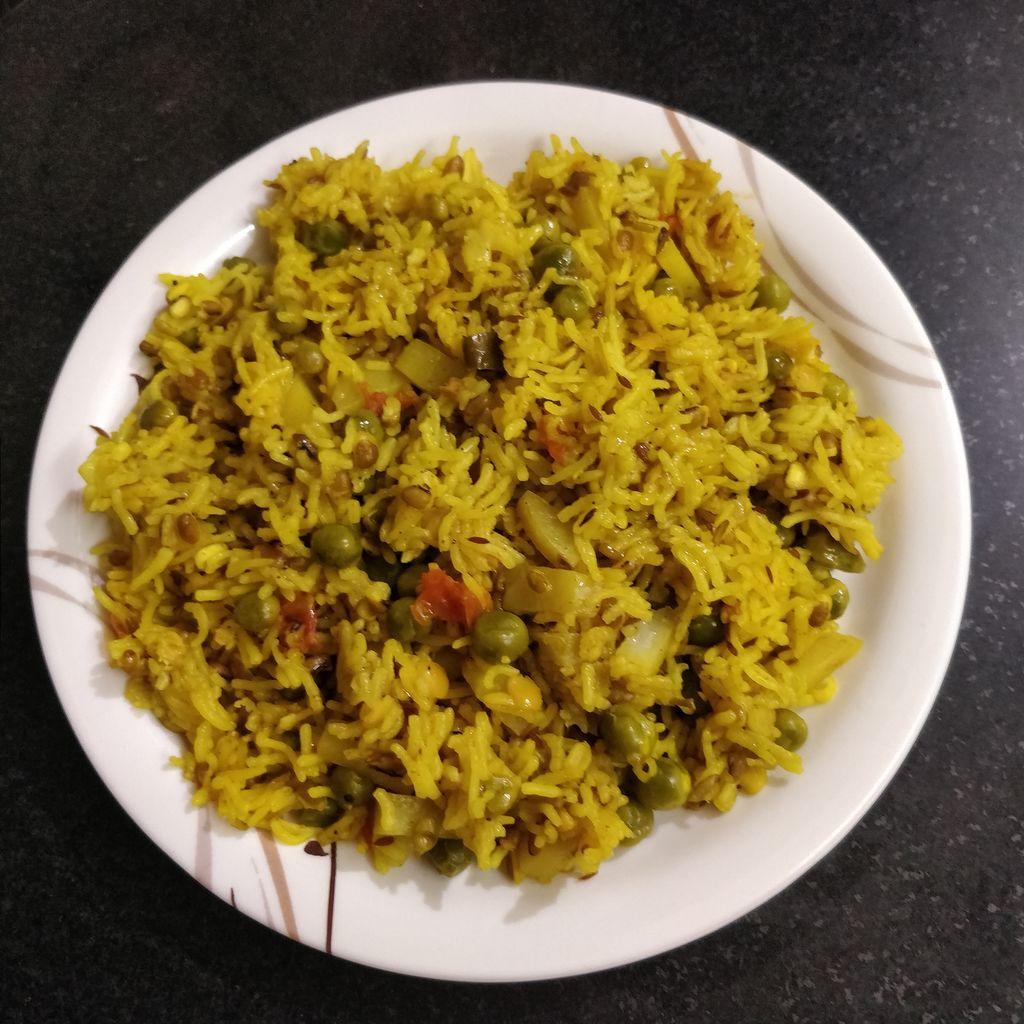
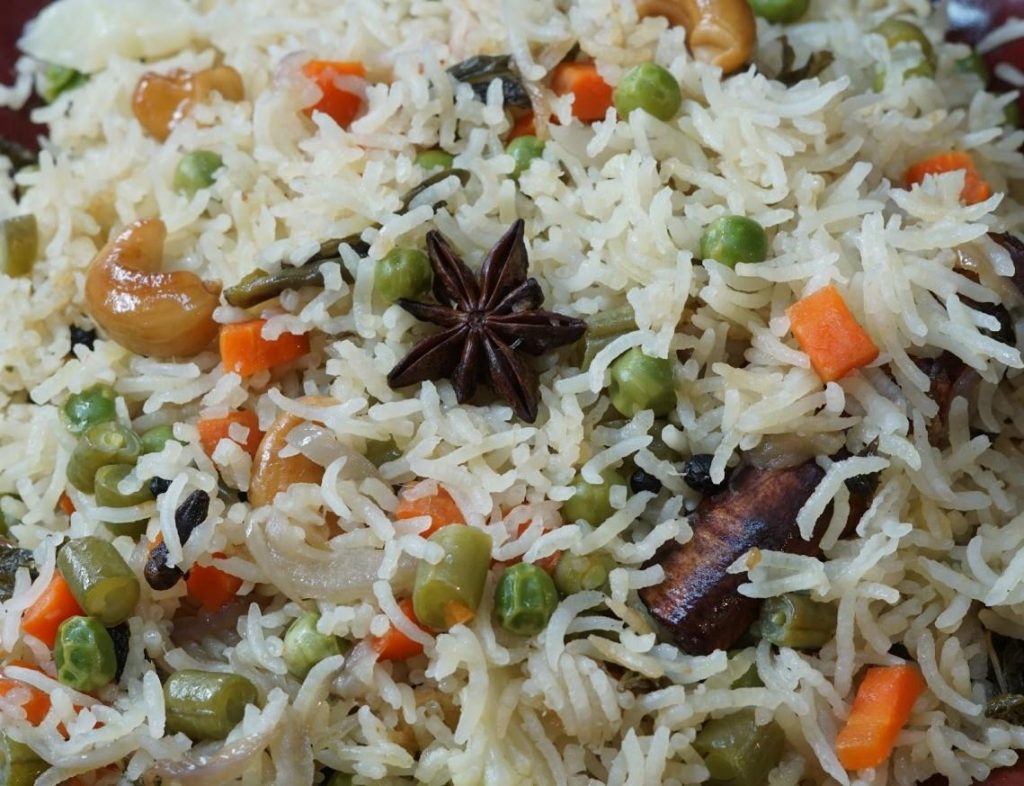
Among the traditional Bengali dishes prepared on this day, Bengali veg pulao or fried rice is one of the key items. This is served hot both during lunch and dinner. Enjoying the mouth-watering items with close relatives and sharing memorable stories and moments is something which you can cherish for a long time!  Following the main course, comes the icing on the cake- Chaler Payesh as dessert! Chaler Payesh is a delicious dessert, a variant of sweet and milky kheer made with rice, and it completes the Poila Baisakh menu. Are you feeling tempted? Well, it’s only a few days wait following which you can enjoy these amazing dishes!

Celebrate this Poila Baisakh with lots of gusto and fun and do let us know how you enjoyed this day. Subho Noboborsho to everyone!

The Legend Of Rice And Chess: Exponential Growth

One of the most powerful concepts to grasp is exponential growth. For a better understanding, let us use an ancient Indian chess legend as an example.

According to the legend, the tradition of serving Paal Payasam to visiting pilgrims started after a game of chess between the local king and Lord Krishna himself.

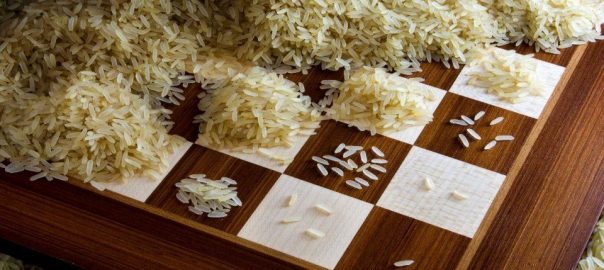
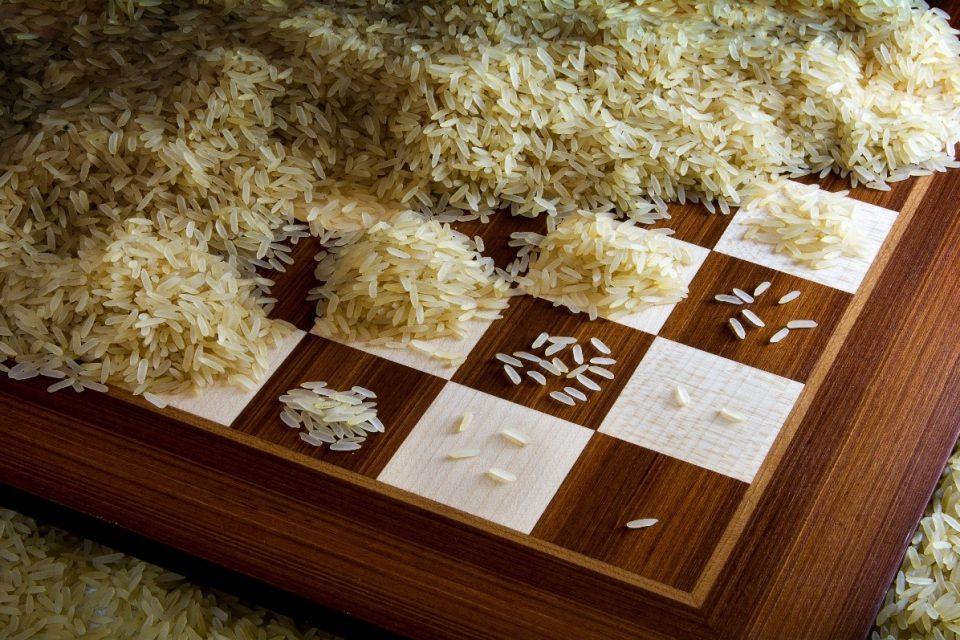
A big chess enthusiast, the king had the habit of challenging wise visitors to a game of chess. On one particular occasion, a traveling sage was challenged by the king. The king offered any reward that the sage could name to motivate his opponent. The sage humbly asked for a few grains of rice in the following manner: the king was to put a single grain of rice on the first chess square and double it on every consequent one.

The king lost the game but being a man of his word ordered a bag of rice to be brought to the chess board. As per the request, he started placing rice grains according to the arrangement: 1 grain on the first square, 2 on the second, 4 on the third, 8 on the fourth and so on:

The king was quick to realize the arrangement as on the twentieth square, the king would have had to put 1,000,000 grains of rice. Following the same logic, on the fortieth square, the king would have had to put 1,000,000,000 grains of rice. Accordingly, the king would have had to put more than 18,000,000,000,000,000,000 grains of rice on the sixty-fourth square which is equivalent to about 210 billion tons. And the amount is sufficient to cover the whole territory of India with a meter thick layer of rice.

At this moment, Lord Krishna revealed his true identity to the king and told him that he doesn’t have to pay the debt immediately but can do so over time. So, to this day visiting, pilgrims are still feasting on Paal Payasam and the king’s debt to Lord Krishna is still being repaid.

Mango Rice-A Source of Respite In The Scorching Heat

Imagine yourself working tirelessly throughout the day and returning home completely exhausted and dehydrated!! The only thing that would satiate your hunger and act as a source of replenishment is mango rice! As you know, mangoes and summer season go hand in hand! The beginning of summer coincides with the arrival of the mangoes. And these delicious mangoes are summer’s joyous herald!

The spiced and tangy rice made from raw unripe green mangoes, the subtle sweetness of fresh coconut and the heat of the red chilies balance very well in this dish. On top of that, the tempering of curry leaves, mustard seeds and asafoetida perks up the flavors in the rice. This particular recipe is inspired by the raw mango rice that is made in Karnataka cuisine, also known as Mavinakayi Chitranna.

One of the most simple and easiest recipes is the mango rice and it is a wholesome tangy specialty that can be made with leftover rice for a refreshing change. Moreover, it is a healthy dish providing essential nourishment and calls for very less or almost no oil or ghee.

The trick for a quality mango rice dish is to cook till the grated mango mixture is tender and then add the cooked fluffy rice and mix well. So, this summer do prepare this dish and enjoy the aromatic flavors of the seasonal raw mango.

Rice Stress Response

It is a known fact that a large portion of the world’s population depends on rice for food. 20% of the calories consumed worldwide is being contributed by rice. Rice is grown in various conditions characterized by different temperatures, climates and soil-water conditions. However, adverse environmental conditions seriously threaten rice production, causing enormous losses in large areas of the world.

The biotic and the abiotic stresses, such as drought, high salinity, high and low temperatures, flooding, high light, ozone, low nutrient availability all represent a serious threat to sustainable rice production. On the other hand, biotic stresses brought by biological agents such as viruses, bacteria, fungi, nematodes, etc. further reduce rice productivity.

Methods have been extensively investigated at physiological, biochemical, genetic and molecular levels to curb the biotic and abiotic stress. Unprecedented opportunities have been offered via the availability of high-throughput techniques for the dissection of the complex signaling pathways and the regulatory gene networks involved in such responses, new tools for the targeted manipulation of stress-related traits are being provided. There are numerous genetically modified rice varieties tolerated to abiotic and biotic stresses. Epigenetic modifications and even spaceflight environment can be quite effective in generating changes at both levels.

Genetic Transformation Prospects Of Rice

Cereals play an important role, providing most important source of calories to humans and rice contributes almost 23% calories globally. Rice is the staple diet of almost half of the population of the world, and it is a well-known economical cereal. The rice production hit a drastic change with the adoption of green revolution. Breeding programs need to evolve to cope with the increase in population and provide pest and disease resistance to the crops. Moreover, the main purpose of genetic transformation is to generate rice with useful phenotypes i.e unachieveable conventional plant breeding, to correct faults in cultivars more efficiently than conventional breeding.

It also helps in yield improvement, more resistant to disease and pest resistance, herbicides tolerance, better nutritional value, increased shelf life, better climatic survival by increasing tolerance to drought. One of the essential requirements in a gene transfer system for production of transgenic rice is the availability of a target tissue including cells competent for plant regeneration, a method to introduce DNA into those re-generable cells and a procedure to select and to re-generate transformed plants at a satisfactory frequency. Rice needs more production with the gradual rise in population and genetic transformation is the only solution in the coming years.

Indian Rice Lentil Dish

One of the most traditional Karnataka recipes is the Bisi Bele Bath (or Indian Rice lentil dish) that is prepared in every household of Karnataka. The dish is extremely popular among the vegetarian folks, who do not favor onions and garlic. Instead of onions or garlic, fresh coconut, poppy seeds, or dry coconut is used. This is also consumed by people who are sick as it has various nutritional values.

Although modern versions of this particular dish exist, in this blog only the traditional way of preparing Bisi Bele Bath would be discussed.  The dish also known as Bisi Bele huli anna can be better understood as bisi( hot) bele(lentils) huli (sour) and anna(rice). The dish is actually dal and rice cooked together with tamarind and spice powders. And the dish tastes splendid when served hot and seasoned in ghee.

Depending upon personal preference, the rice and the dal can be cooked together or separately. The dal can be made mushy, however the rice is cooked grainly. If this is done, the smooth creamy taste of the Bisi Bele Bath can be felt. So with the richness of rice and dal you get to enjoy a lovely dish which would definitely make you content, provide you proper nourishment and last but not the least happy!